
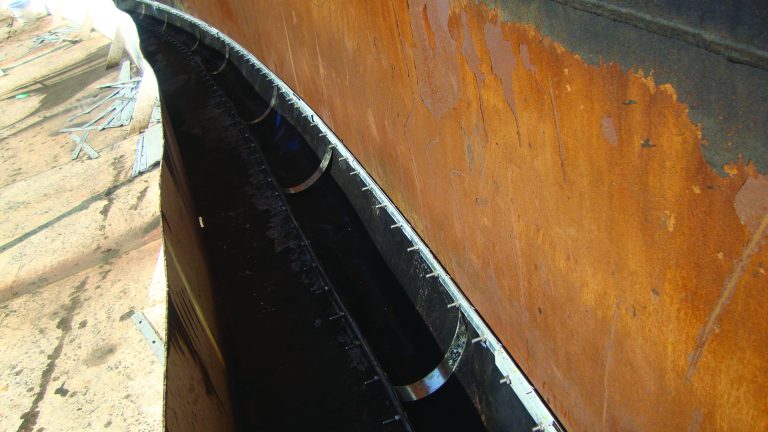
The Primary Mechanical Shoe Plate Spring Type Roof Sealing System is a robust and widely used vapor control system installed on External Floating Roof Tanks (EFRTs). It consists of metallic shoe plates that are positioned vertically against the inner tank wall and attached to the floating roof by a system of lever arms and springs. These springs apply continuous radial pressure, ensuring the shoe plates remain in contact with the tank wall as the roof moves vertically with the product level.
A vapor barrier (typically made from PTFE, nitrile rubber, or other flexible materials) bridges the gap between the shoe plates and the roof, preventing vapors from escaping. This design provides a high-integrity seal that adapts to minor deformations and tank out-of-roundness.
Superior Sealing Performance: Excellent containment of volatile organic compounds (VOCs), especially for highly volatile products like gasoline or crude oil.
Spring-Loaded Contact: Maintains constant sealing pressure regardless of roof position or minor tank irregularities.
Corrosion Resistance: Components are often made of stainless steel or corrosion-protected metals for long service life.
Compliance Support: Helps meet environmental regulations such as EPA 40 CFR Part 60 (NSPS) and API 650.
Long-Term Reliability: Mechanically simple and highly durable, requiring minimal ongoing adjustments.
Fire Safety: Reduces accumulation of flammable vapors in the tank vapor space.
Primary Mechanical Seal using shoe plates and spring tensioning system
Crude Oil Storage Tanks
Gasoline and Naphtha Storage
Jet Fuel and Aviation Fuel Terminals
Petrochemical Bulk Storage Tanks
Blending Facilities
Oil & Gas
Petrochemical
Chemical Manufacturing
Energy Terminals
Refineries
This seal type is particularly suitable for large-diameter EFRTs storing highly volatile, hazardous, or flammable liquids.
| Feature | Specification / Options |
|---|---|
| Seal Type | Primary Mechanical Seal with Metal Shoe Plates and Springs |
| Seal Material | Stainless Steel (SS304, SS316), Galvanized Carbon Steel |
| Vapor Barrier | PTFE, Nitrile Rubber, Neoprene |
| Spring Mechanism | Stainless steel coil or leaf springs providing radial tension |
| Tank Diameter Range | Up to 130 meters or custom engineered |
| Seal Gap Coverage | 150–300 mm (adjustable based on tank design) |
| Operating Temperature | -40°C to +80°C (custom solutions for extreme conditions) |
| Tank Wall Contact | Continuous metal-to-metal contact with sliding vapor barrier |
| Standards & Codes | API 650 Appendix H, API 652, EPA 40 CFR Part 60, EN 12285, ISO 28300 |
Tank Access: Typically performed during tank construction or major maintenance shutdown.
Mounting Shoe Plates: Shoe plates are aligned and installed along the tank wall perimeter.
Spring Assembly: Spring arms are connected between the floating roof and the shoe plates to ensure constant tension.
Vapor Barrier Attachment: A flexible vapor barrier is secured between the roof and shoe plates to contain vapors.
Regular Visual Inspections: Check for wear, spring fatigue, corrosion, or barrier damage.
Spring Tension Check: Ensure spring components remain under proper tension and replace if fatigued.
Seal Material Check: Examine vapor barrier for tears, hardening, or chemical degradation.
Cleaning: Periodically clean the seal area to remove debris or product residue.
Maintenance is typically required on a semi-annual to annual basis, depending on tank service and regulatory requirements.
VOC Emission Reduction: Key in reducing emissions of hazardous air pollutants and greenhouse gases.
Helps Meet Compliance Goals: Essential for meeting environmental legislation like the Clean Air Act (USA) or EU VOC Directives.
Product Preservation: Prevents evaporation of stored hydrocarbons, conserving valuable resources.
Recyclable Materials: Stainless steel and aluminum components can be reused or recycled at end of life.
Passive Operation: No external energy or automation required—works entirely on mechanical force.
Long-Lasting: Durable design reduces material waste and lifecycle replacement needs.
If not maintained, seal failure can result in fugitive emissions, product losses, and regulatory non-compliance.
Corrosion of components may compromise effectiveness and increase environmental risk.